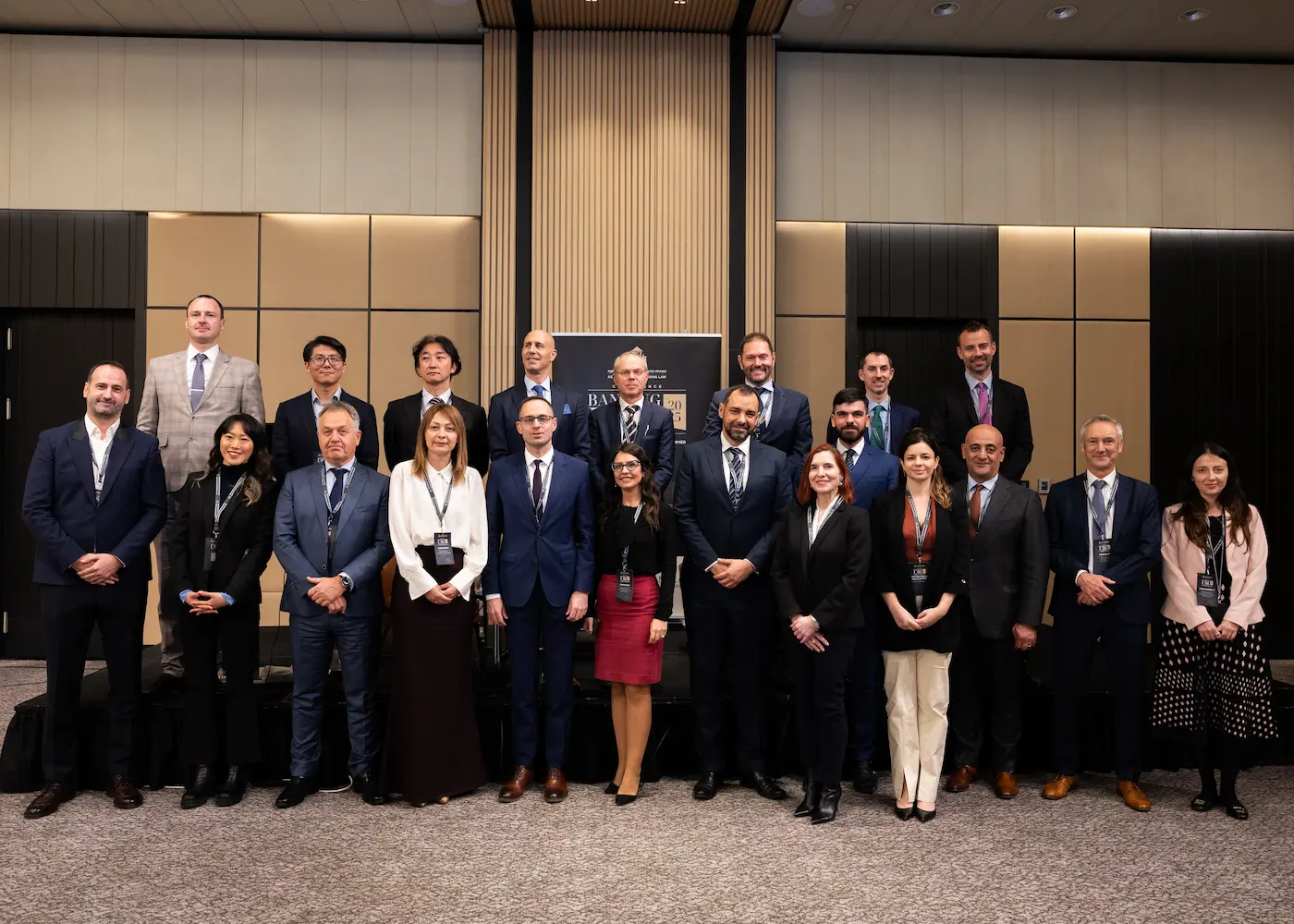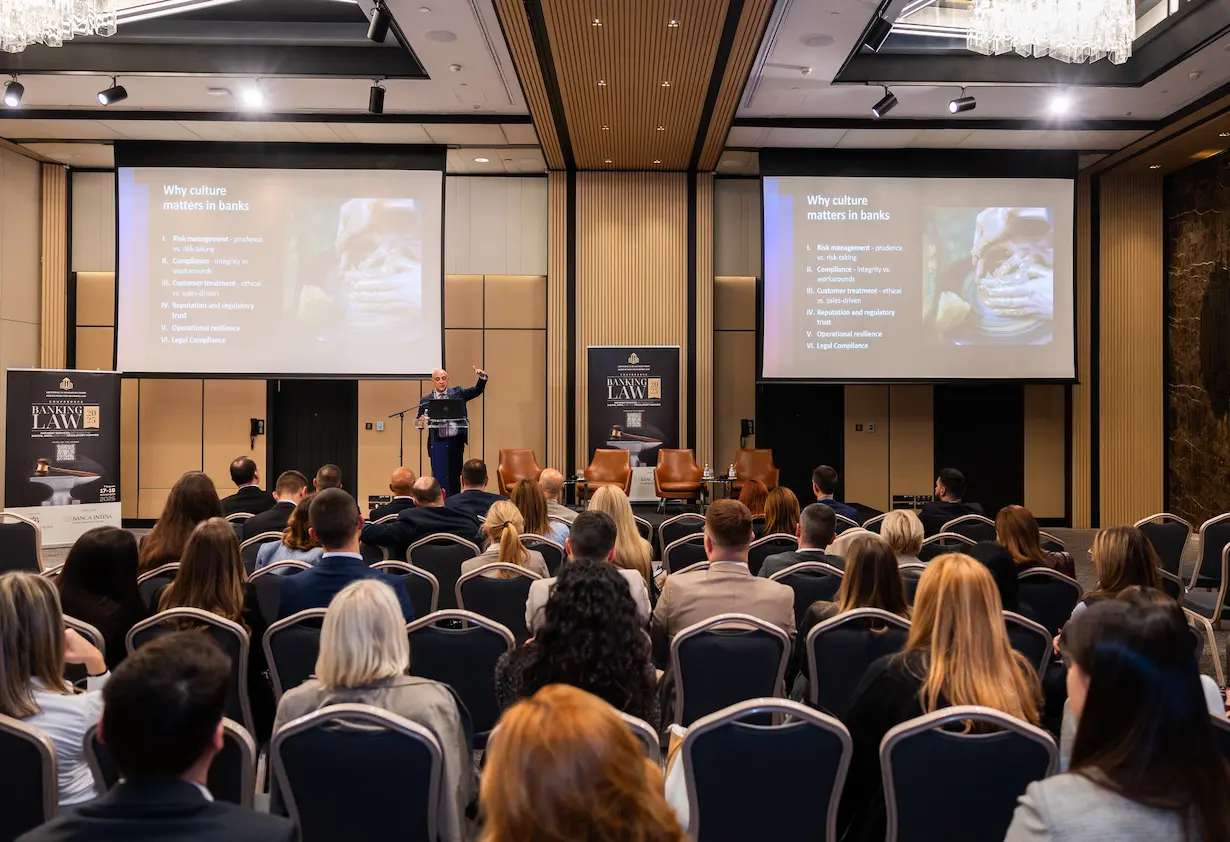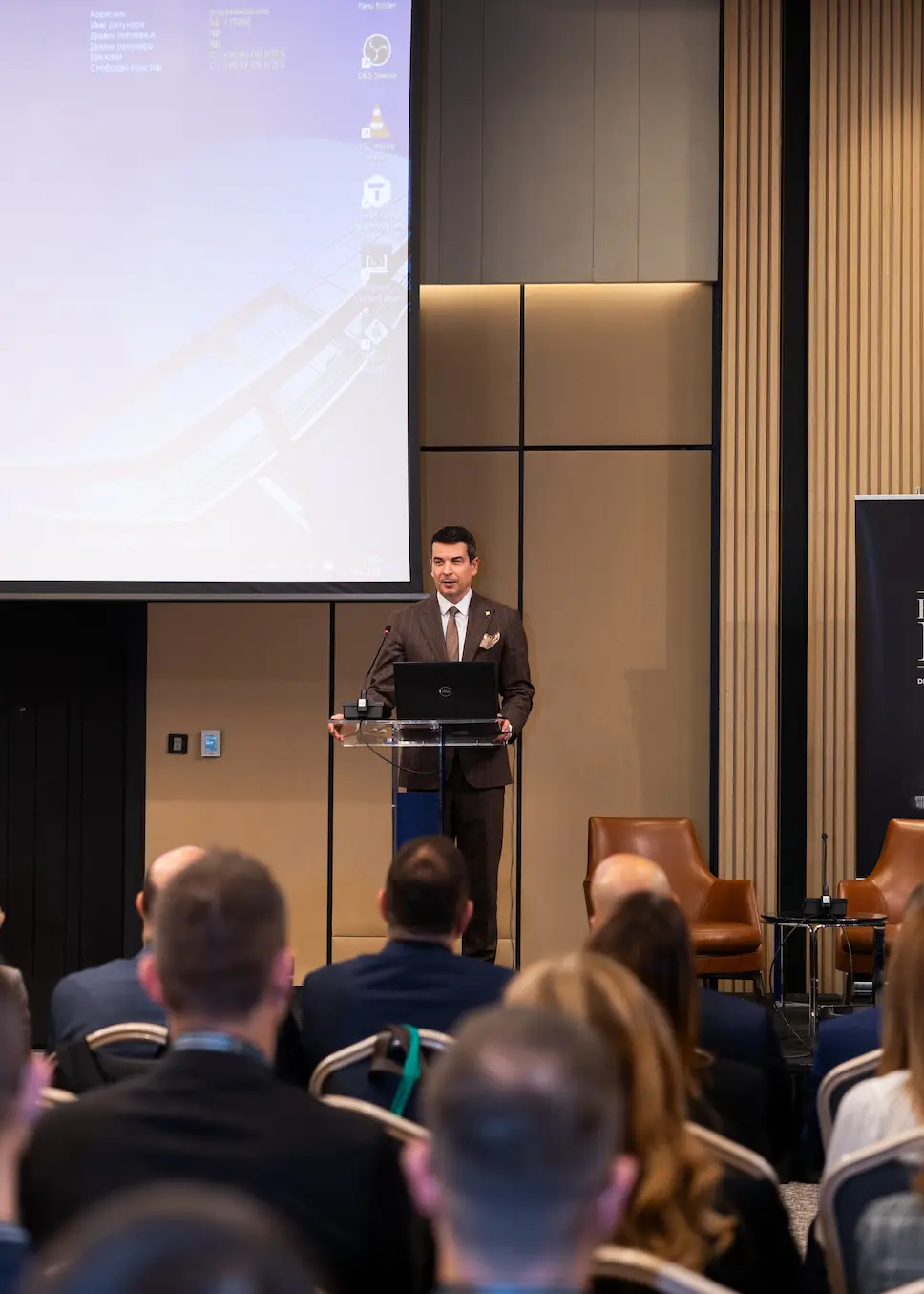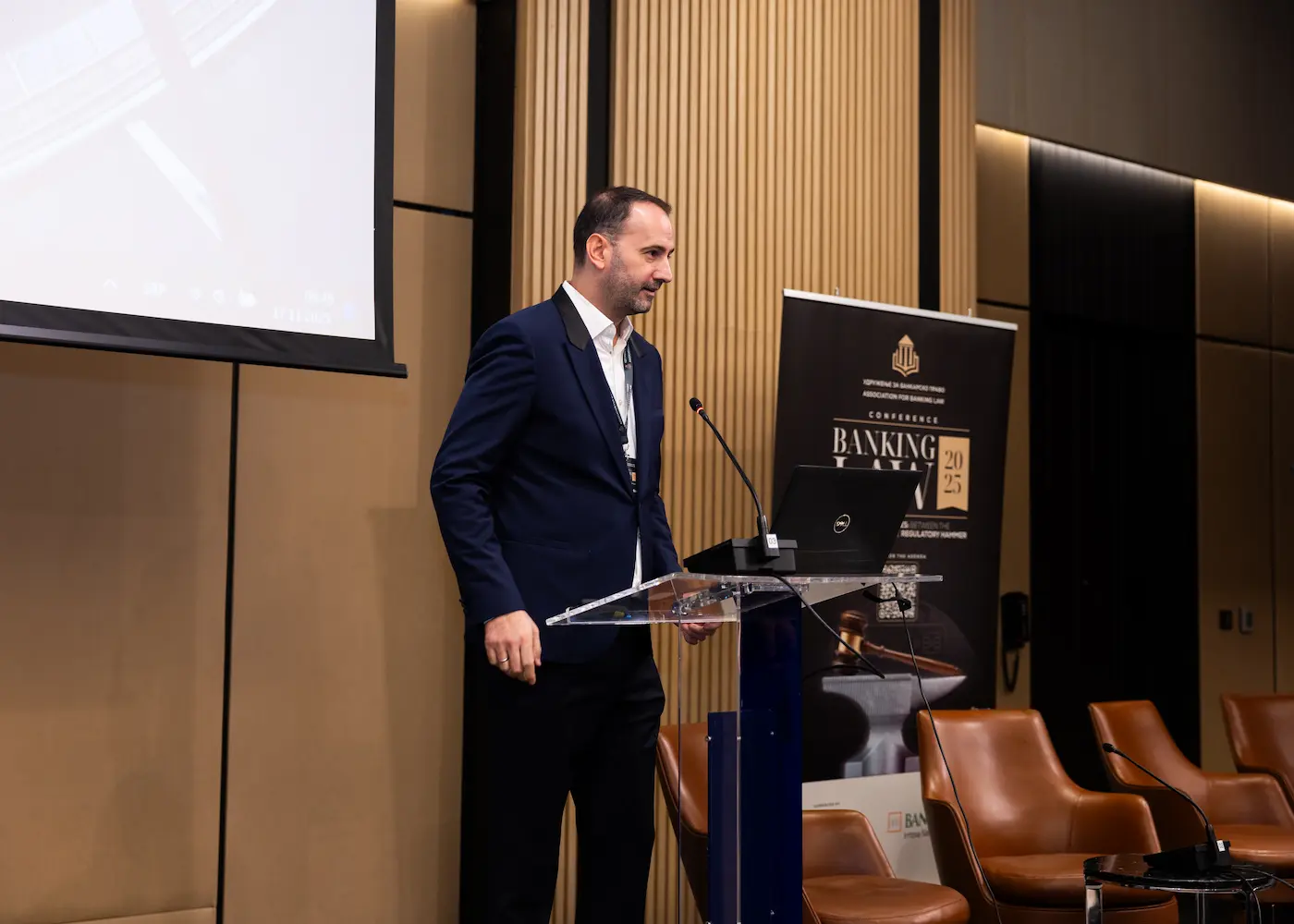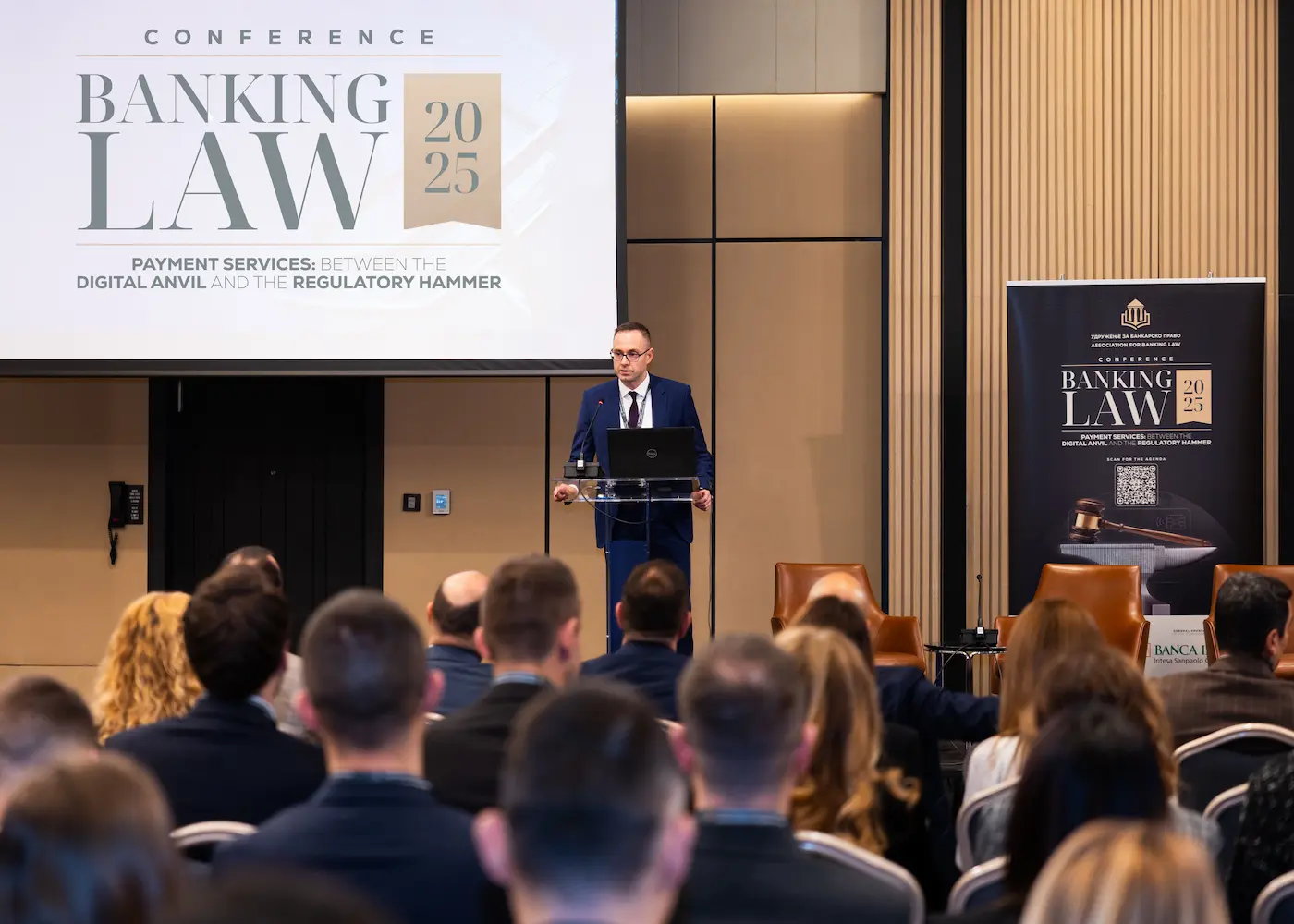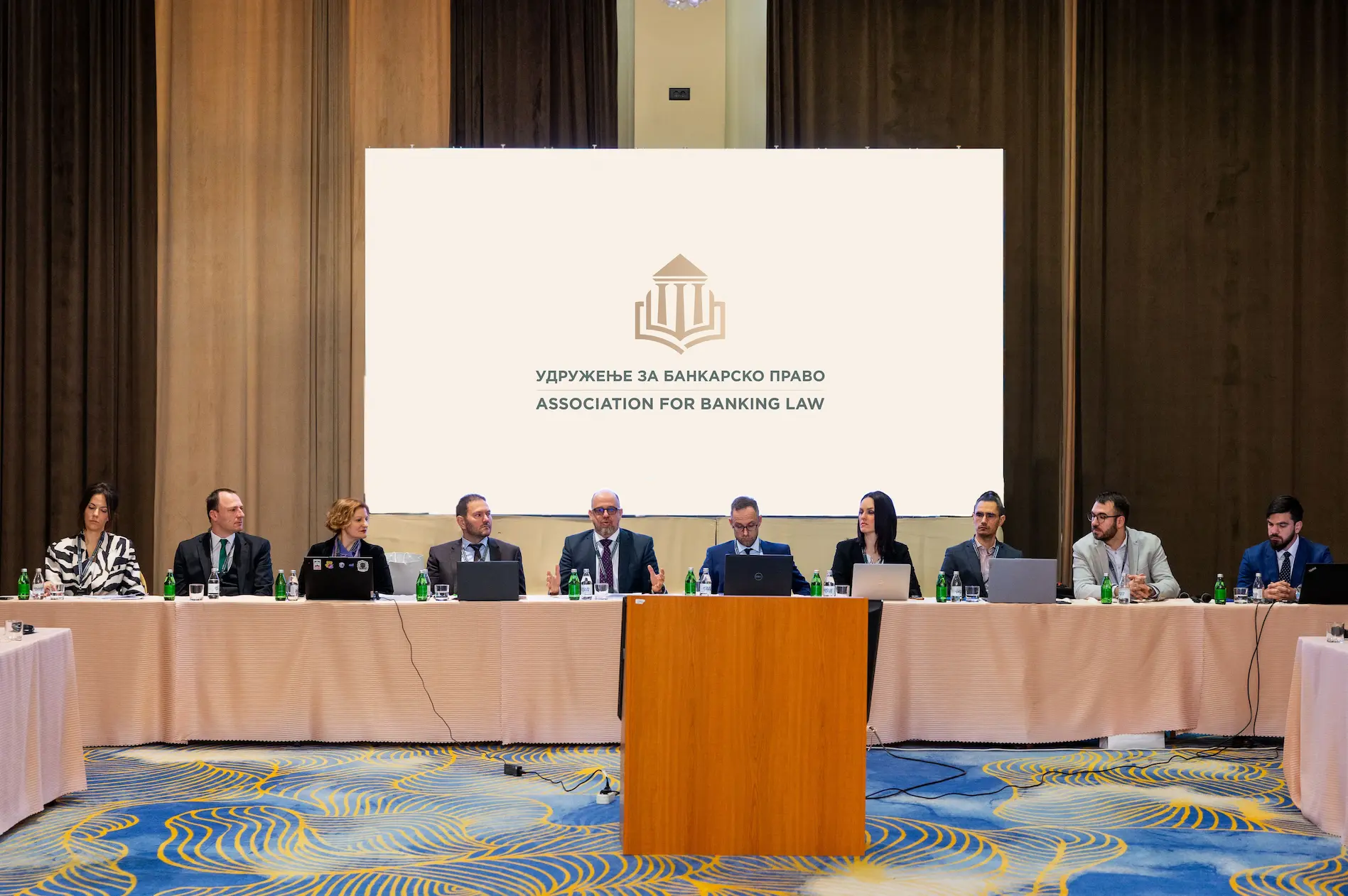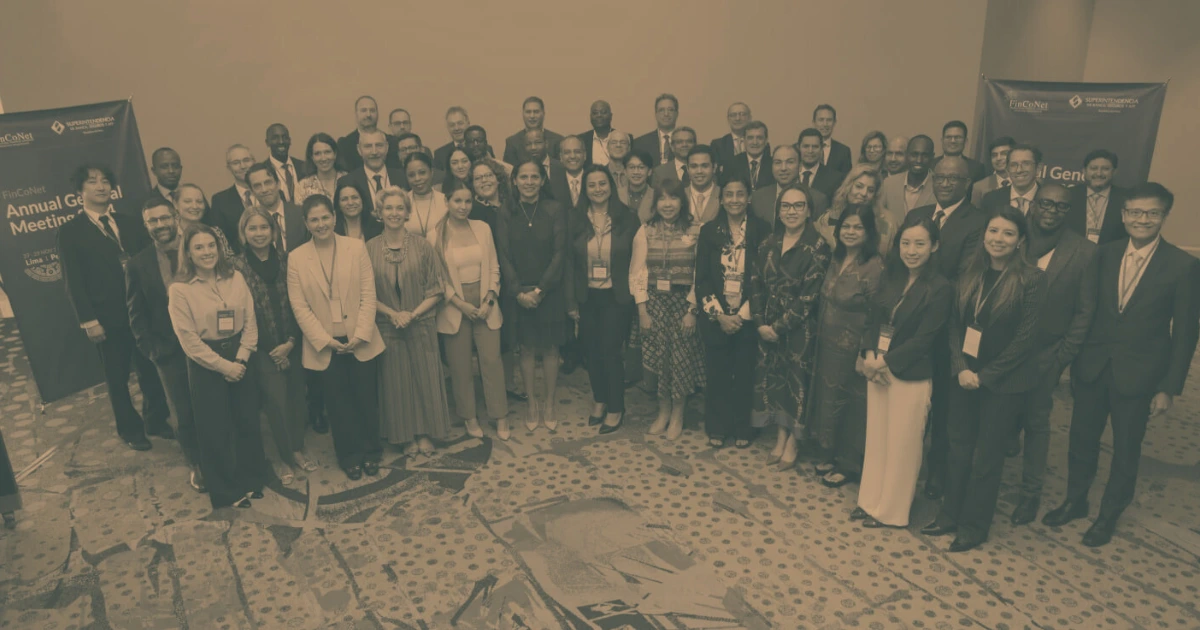

The Association for Banking Law organized the second international conference “Banking Law 2025 – Payment Services: Between the Digital Anvil and the Regulatory Hammer” on 17 and 18 November 2025. The conference was held at the Hilton Hotel in Belgrade, with the support of the National Bank of Serbia and the sponsorship of Banca Intesa ad Beograd.
The conference brought together domestic and international experts from various fields. Participants included representatives of regulatory institutions, central banks, international financial institutions, banks and the payments sector. Representatives of the legal profession and academia also took part.
Over the course of two working days, the conference addressed issues at the heart of current developments in the financial sector. The programme covered the evolution of money and payment services, consumer protection in financial services, and digital wallets.
In addition, discussions focused on the relationship between banks and large technology companies. Particular attention was given to instant payments, open banking and the digital euro. Other topics included fintech regulation, cyber fraud, the application of artificial intelligence and corporate governance in banks.
The international character of the conference was of particular importance. Experts from different legal systems and institutions presented their experience. This made it possible to examine issues relevant to domestic banking law from different regulatory, legal and market perspectives.
At the same time, domestic experience could be directly compared with current developments in other financial systems.
Opening of the Conference
The conference was formally opened by Dr Jorgovanka Tabaković, Governor of the National Bank of Serbia.
In her opening remarks, the Governor recalled the idea behind the establishment of the Association for Banking Law. Its objective was to facilitate the exchange of knowledge and experience in the dynamic field of banking law.
She also highlighted the importance of conferences as a means of exchanging knowledge and establishing professional contacts. Such contacts can contribute to the long-term exchange of experience.
The Governor also emphasized the international character of the Association’s second conference. The event featured 13 eminent speakers from different parts of the world.
Digital Development and Regulatory Challenges
Addressing the central theme of the conference, the Governor spoke about two sides of the development of modern payments. The first concerns the continued advancement of digital services.
This development is driven by the demand for faster transfers and an improved customer experience. However, digital services also create new risks. Consequently, there is a need for appropriate regulation and supervision.
She particularly emphasized the growing economic value of data generated through the use of digital wallets and payment applications.
Furthermore, the development of artificial intelligence introduces additional complexity. It also creates new risks in the area of financial services.
Banks and BigTech Companies
In addressing the relationship between banks and BigTech companies, the Governor highlighted the position of banks as highly regulated institutions.
Banks are increasingly adapting to the technological standards and business models of major technology companies. In this context, she discussed the relationship between innovation and sovereignty.
She also addressed the relationship between technological progress and regulatory responsibility. In addition, she discussed central bank digital currencies as one possible response to these challenges.
She noted that Serbia, through its national card scheme Dina and the NBS Instant Payment System, has to a significant extent preserved its sovereignty in domestic payment services.
Consumer Protection and Corporate Governance
The Governor also addressed other topics covered by the programme. Particular attention was given to the protection of credit users.
She also highlighted the challenge of encouraging consumers to compare different offers. In addition, she emphasized the importance of understanding the economic consequences of borrowing.
Corporate governance was identified as a continually relevant topic for prudential supervisors.
At the end of her address, the Governor invited participants to make full use of the opportunities offered by the conference. She encouraged them to listen carefully to the speakers, ask questions and exchange experiences.
Following the Governor’s address, Darko Popović, President of the Executive Board of Banca Intesa ad Beograd, addressed the participants on behalf of the conference sponsor.
Popović highlighted the significant transformation of payment services. These services have become one of the most visible forms of financial innovation.
He addressed the role of the National Bank of Serbia in transforming the domestic payment system. Particular attention was given to promoting digital payments and modernizing infrastructure.
He also discussed the alignment of domestic legislation with European standards. In addition, he addressed the role of banks in embracing innovation and developing modern solutions.
The opening remarks therefore established the broader framework for the topics that shaped the two-day conference. These included innovation and regulation, the future of payment systems, consumer protection, technological risks and corporate governance.
International Experience and the Development of Modern Financial Services
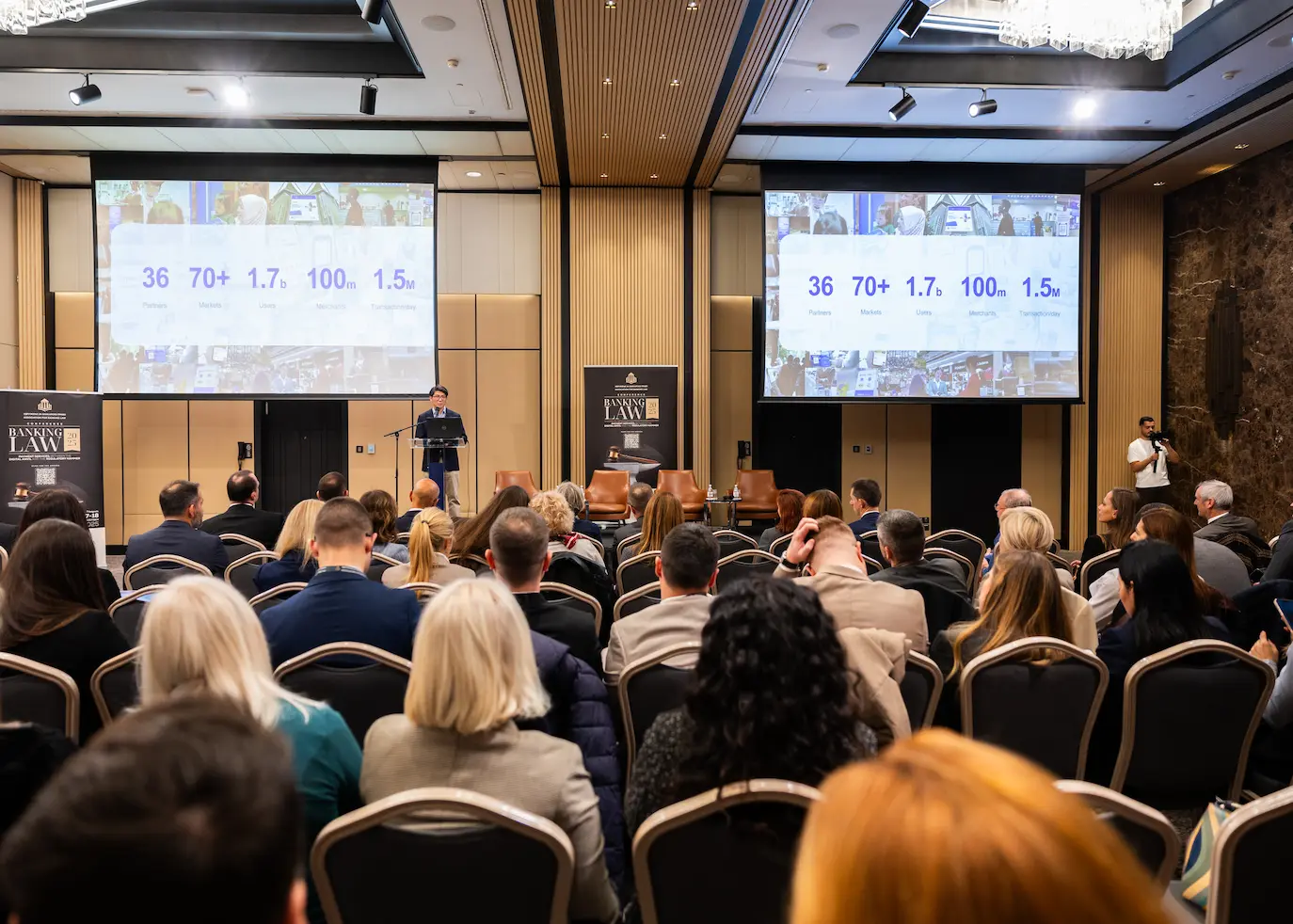
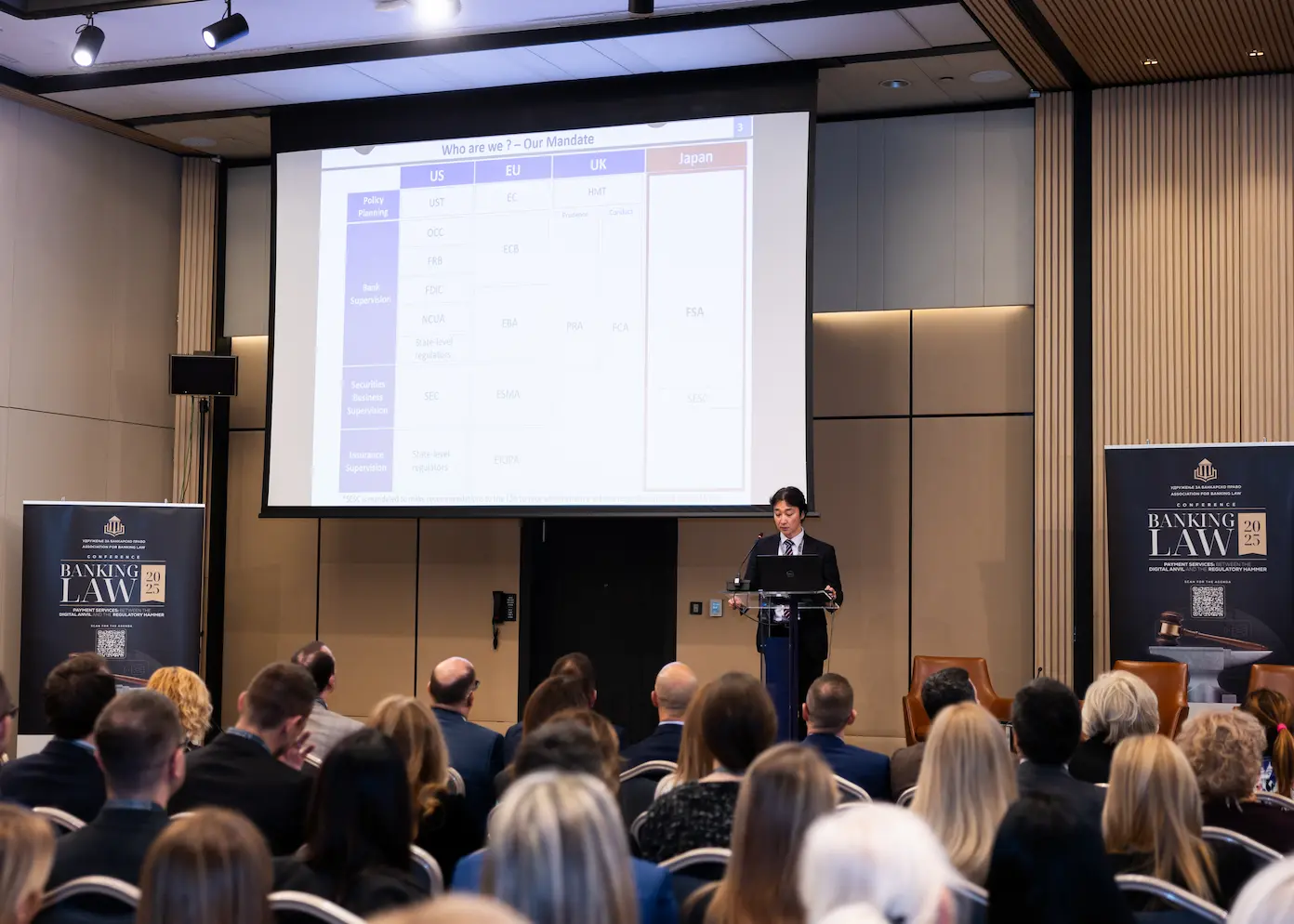
The professional programme opened with a presentation by Dr Jutaro Kaneko, Deputy Commissioner, Financial Services Agency (FSA), Government of Japan.
His presentation focused on fiduciary duty in the Japanese financial sector. Particular attention was given to cross-border payments, asset management, artificial intelligence and private credit funds.
The programme continued with Matthias Roder, Bavarian Consumer Protection Authority, who presented German experience concerning the implementation of the new European Union Directive on consumer credit.
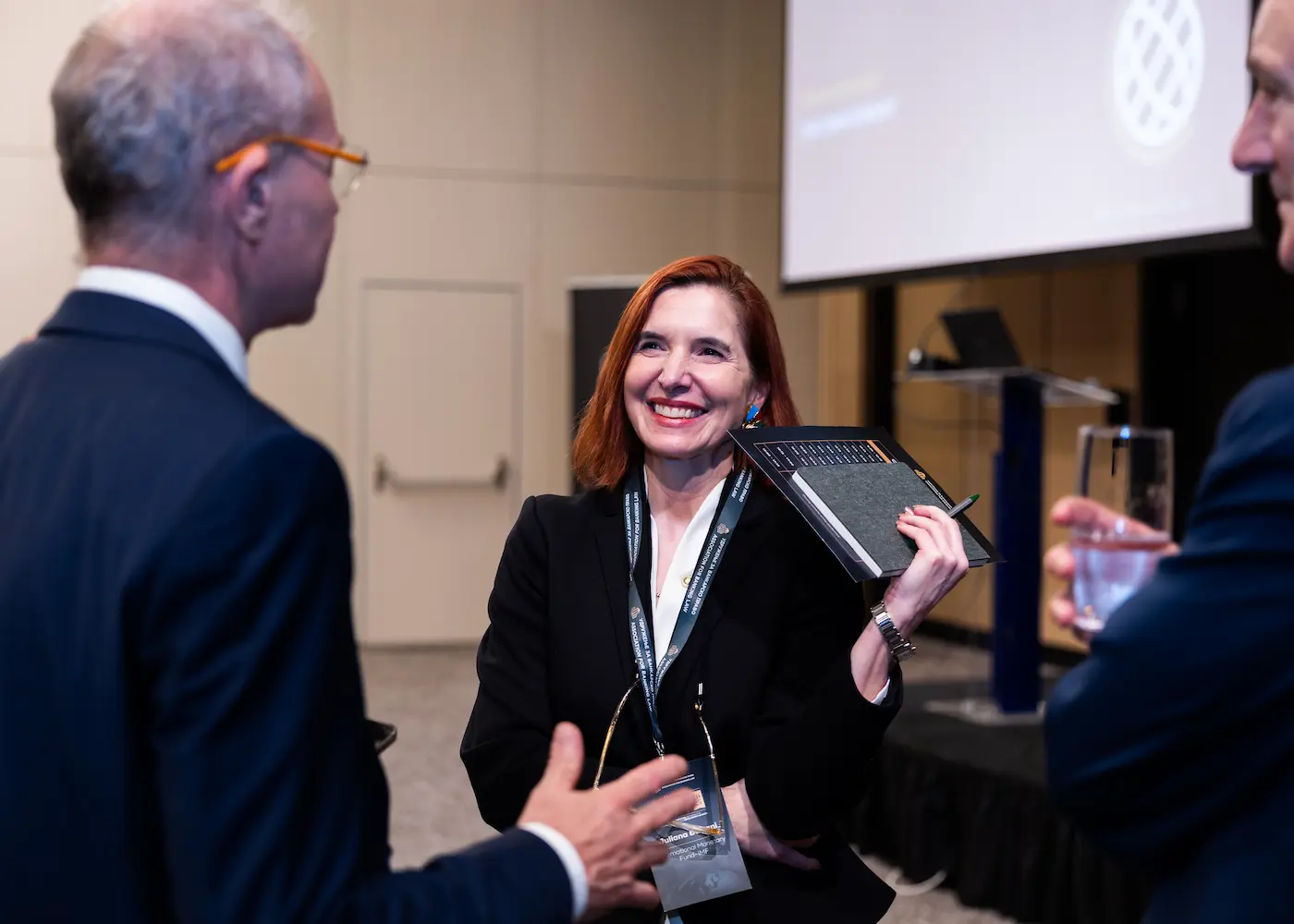
Following this, Juliana Bolzani, Senior Counsel, International Monetary Fund, addressed the legal aspects of the development of money and payments.
The programme continued with a presentation by César Pérez del Valle, Specialist in Conduct Policy and Compliance, Central Bank of Spain. He presented the topic “White Labelling in Banking and Payments”.
Next, Christoph Baert, Senior Managing Counsel, Mastercard, presented current developments in European Union legislation concerning payment services.
The first part of the programme concluded with a presentation by Mohamed Bardastani, Chief Economist, Visa CEMEA. His presentation addressed global economic developments from Visa’s perspective.
Thus, the first day brought together a range of perspectives. The programme included national regulatory institutions, international financial institutions and global participants in the payment services market.
Banks, BigTech and the Future of Digital Wallets
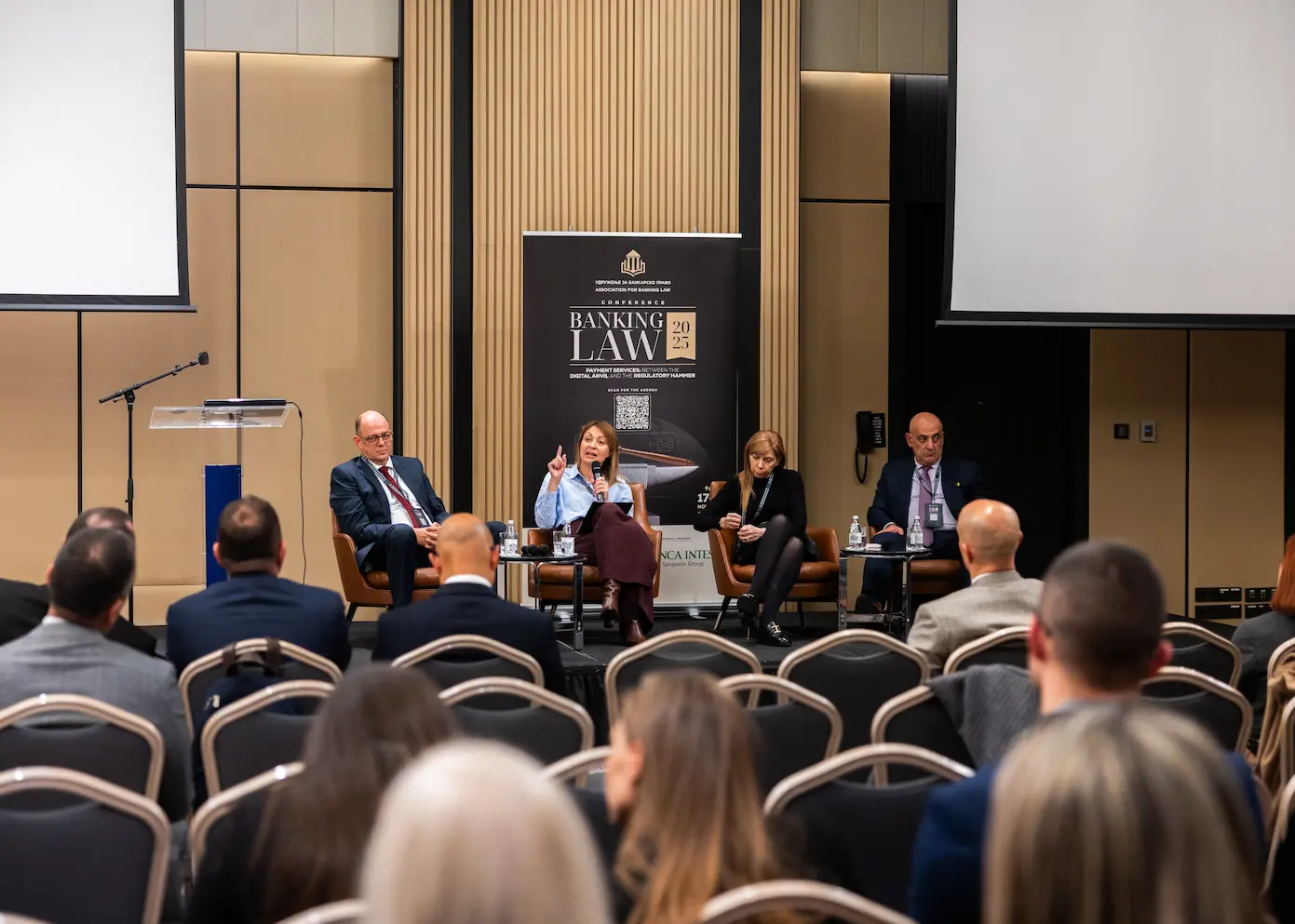
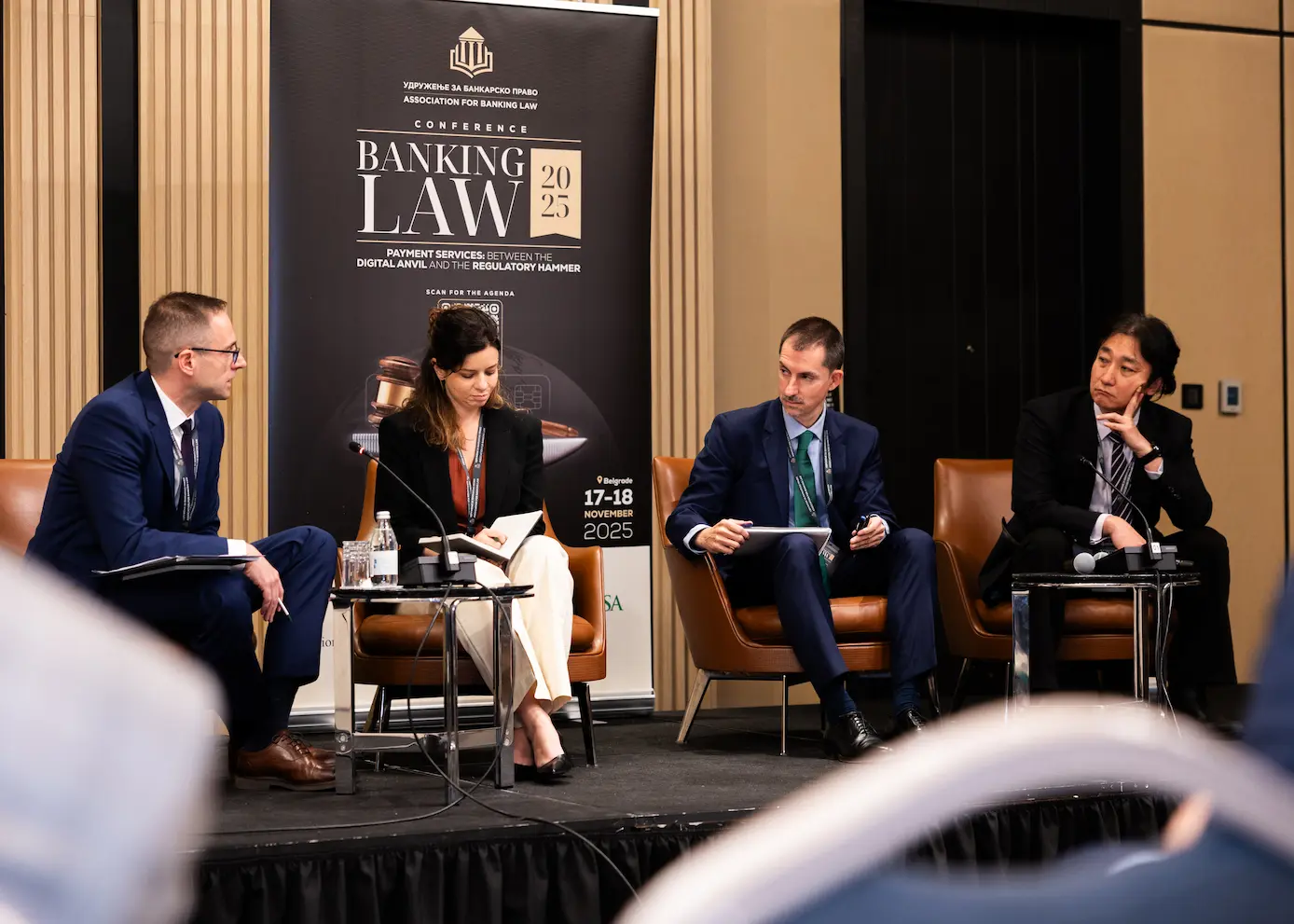
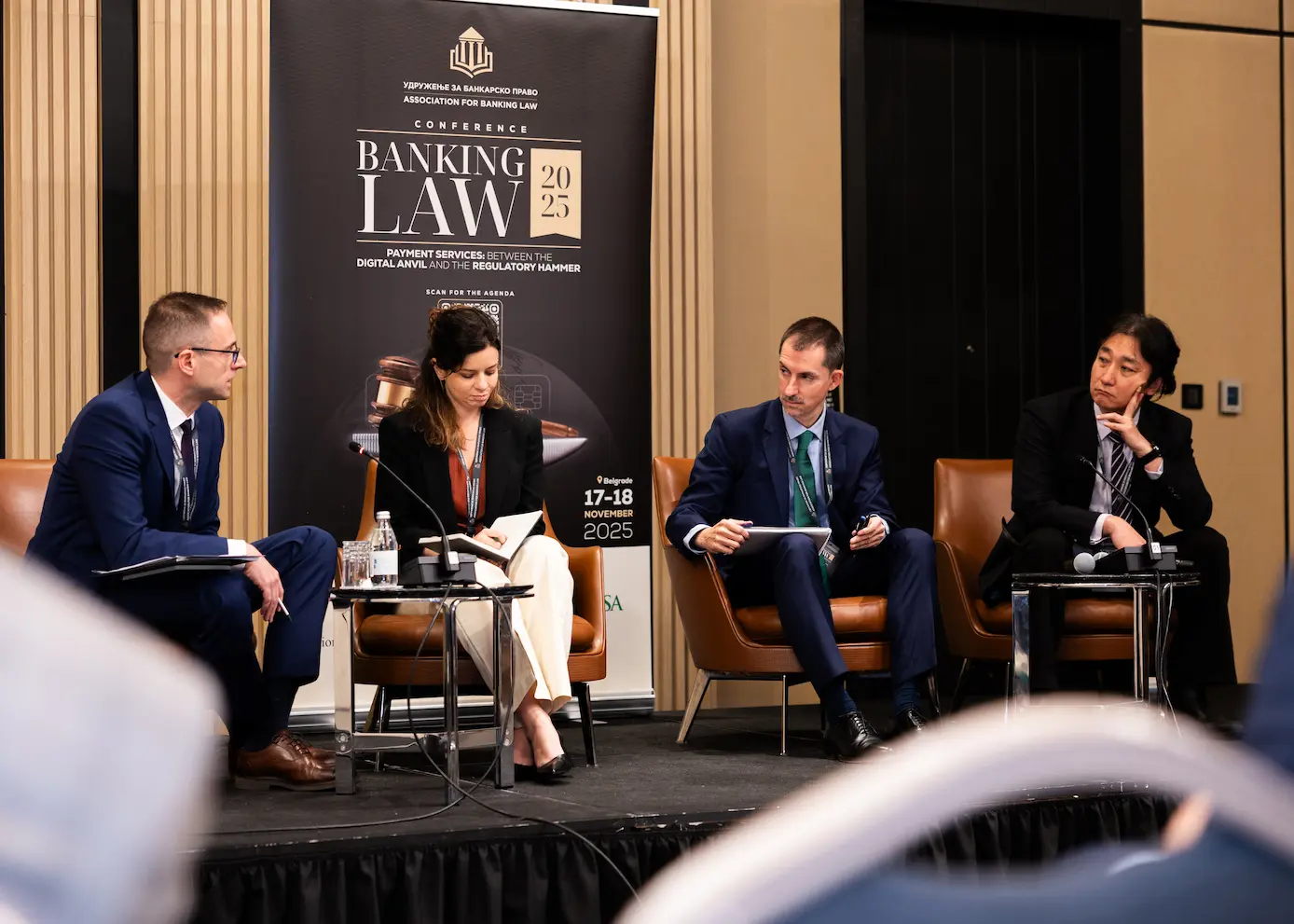
The first working day concluded with a panel discussion entitled “When Banks Meet Big Tech – Who Owns the Customer in the Digital Wallet Era?”
The panel focused on the relationship between traditional banking and major technology companies. It also examined the position of consumers in an environment where digital wallets are becoming increasingly widespread.
The panel was moderated by Bojan Terzić of the National Bank of Serbia. The discussion featured César Pérez del Valle from the Central Bank of Spain, Jutaro Kaneko from the Financial Services Agency of Japan, and Thaís Dorneles de Figueiredo Pinto from the Central Bank of Brazil.
The participation of representatives of regulatory institutions from Europe, Asia and South America enabled a direct exchange of experience.
Moreover, participants had the opportunity to compare different approaches to the changes brought about by the increasingly significant presence of technology companies in the financial services market.
Digital Wallets, Instant Payments and Open Banking
The second working day focused significantly on technology. Particular attention was given to the changes that digitalization is bringing to traditional banking and payment services.
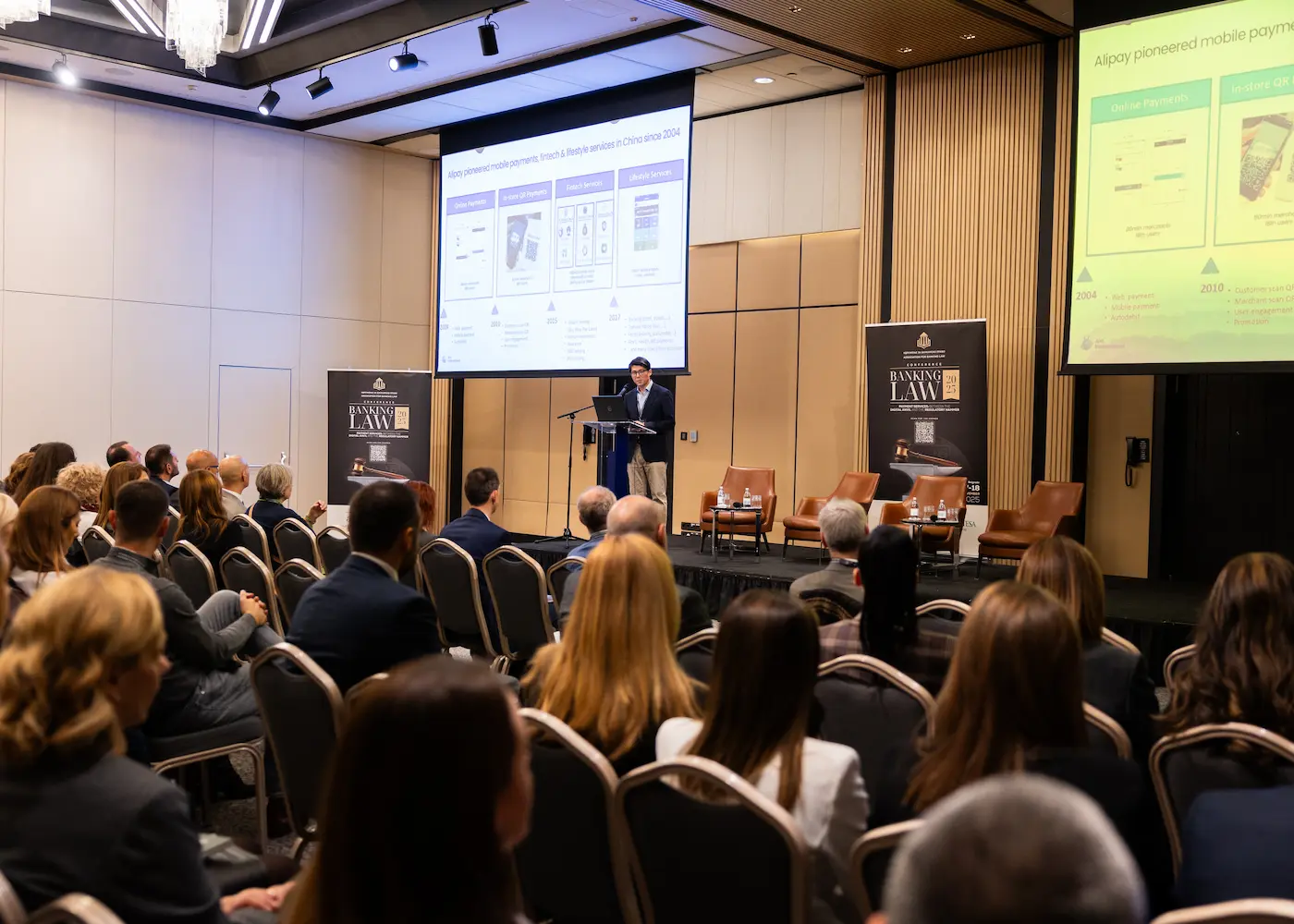
The programme opened with a presentation by Jun Cai, Head of Alipay UK, Germany, Switzerland, Austria & CEE. The presentation was entitled “The Power of Digital Wallet”.
This was followed by a presentation by Thaís Dorneles de Figueiredo Pinto, Financial Sector Specialist, Central Bank of Brazil, entitled “Brazilian Instant Payment System and Open Banking Services”.
The presentation focused on Brazil’s experience in developing instant payment systems and open banking services.
Digital Euro and Fintech Regulation
A dedicated segment of the second working day focused on the future of European money. At the same time, the regulatory response to the development of the fintech industry was examined.
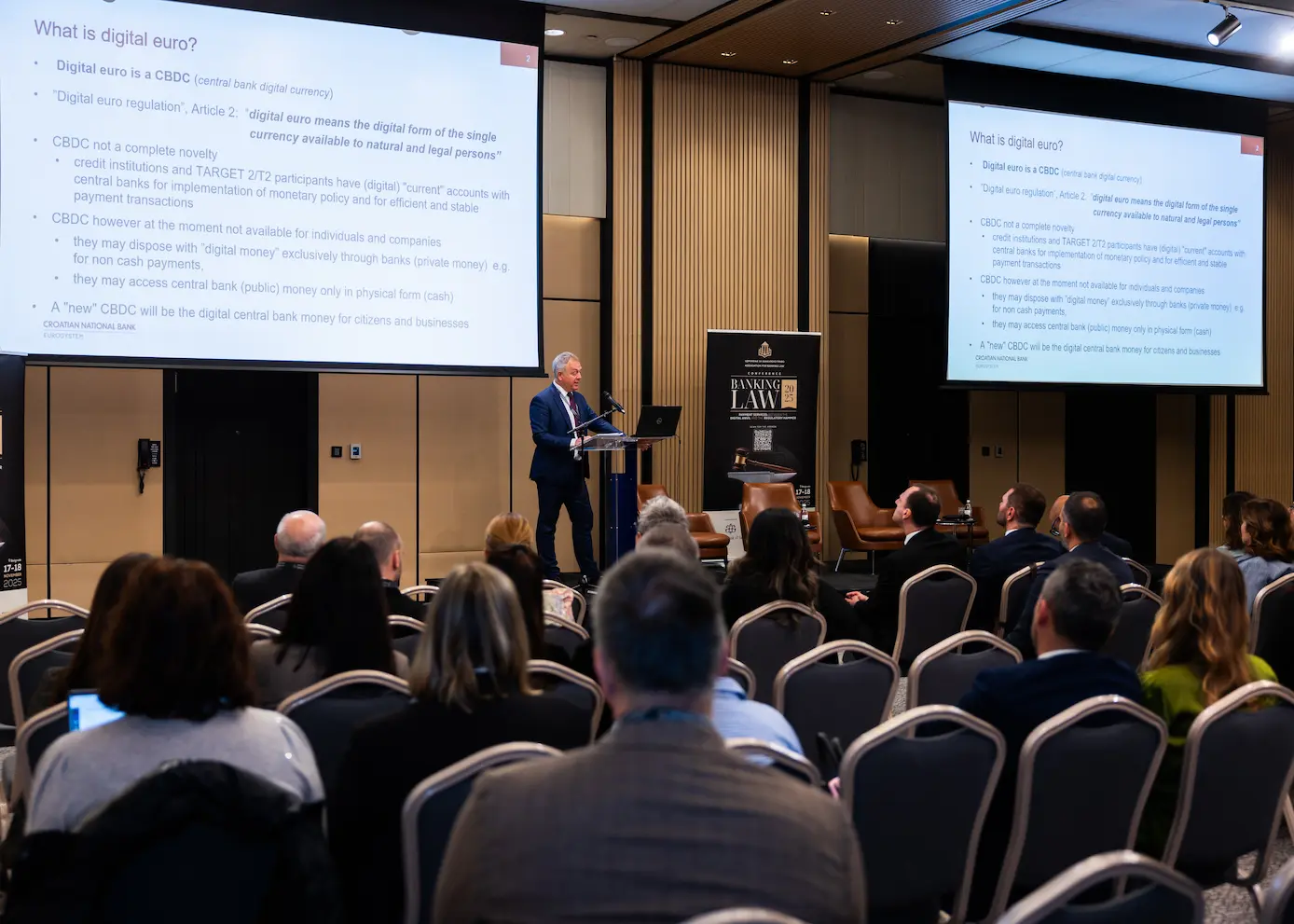
Bojan Fras, Deputy Governor of the Croatian National Bank, spoke on “The Digital Euro: Concept and Evolution”. He presented the concept and development of the digital euro.
This was followed by a presentation by Aki Corsoni-Husain, Partner, Harneys (London), entitled “Fintech Regulation Across the EU and Beyond, Case Studies on Implementation”.
The presentation focused on fintech regulation within and beyond the European Union. It also presented practical experience in implementing such regulation.
Payment Fraud, Artificial Intelligence and Emerging Risks
One of the central topics of the second working day concerned payment fraud. Particular attention was given to the new risks arising from the rapid development of technology.
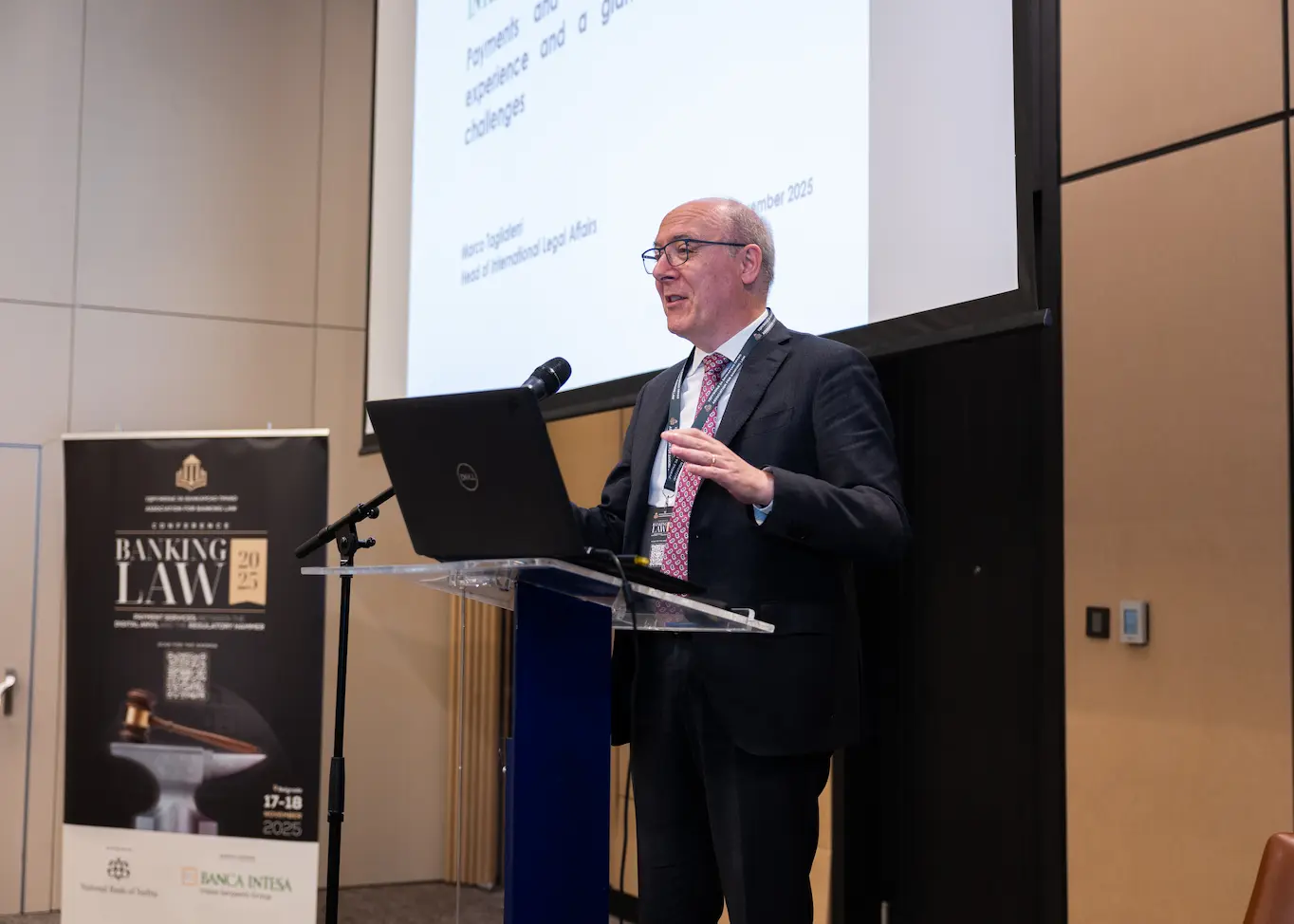
Marco Tagliaferri, Senior Director, Intesa Sanpaolo, delivered a presentation entitled “Payments and Cyberfrauds: the Italian Experience and a Glance at Upcoming Challenges – Cloning and Artificial Intelligence”.
The presentation covered Italian experience in the field of cyber fraud and payment-related fraud. It also examined the most common forms of such abuse.
In addition, the presentation addressed the practice of the Italian body responsible for the out-of-court resolution of disputes between customers and banks.
Particular attention was given to new challenges associated with cloning and artificial intelligence.
This thematic session highlighted the increasingly close relationship between banking law, technology and consumer protection. It also demonstrated the need for professional discussions on payment services to evolve alongside new forms of risk emerging in the digital environment.
Corporate Governance in Banks
The final thematic block of the conference focused on corporate governance in banks.
Varoujan Avedikian, Professor and Managing Partner at Andersen Global, Armenia, delivered a presentation entitled “Corporate Governance in Banks”.
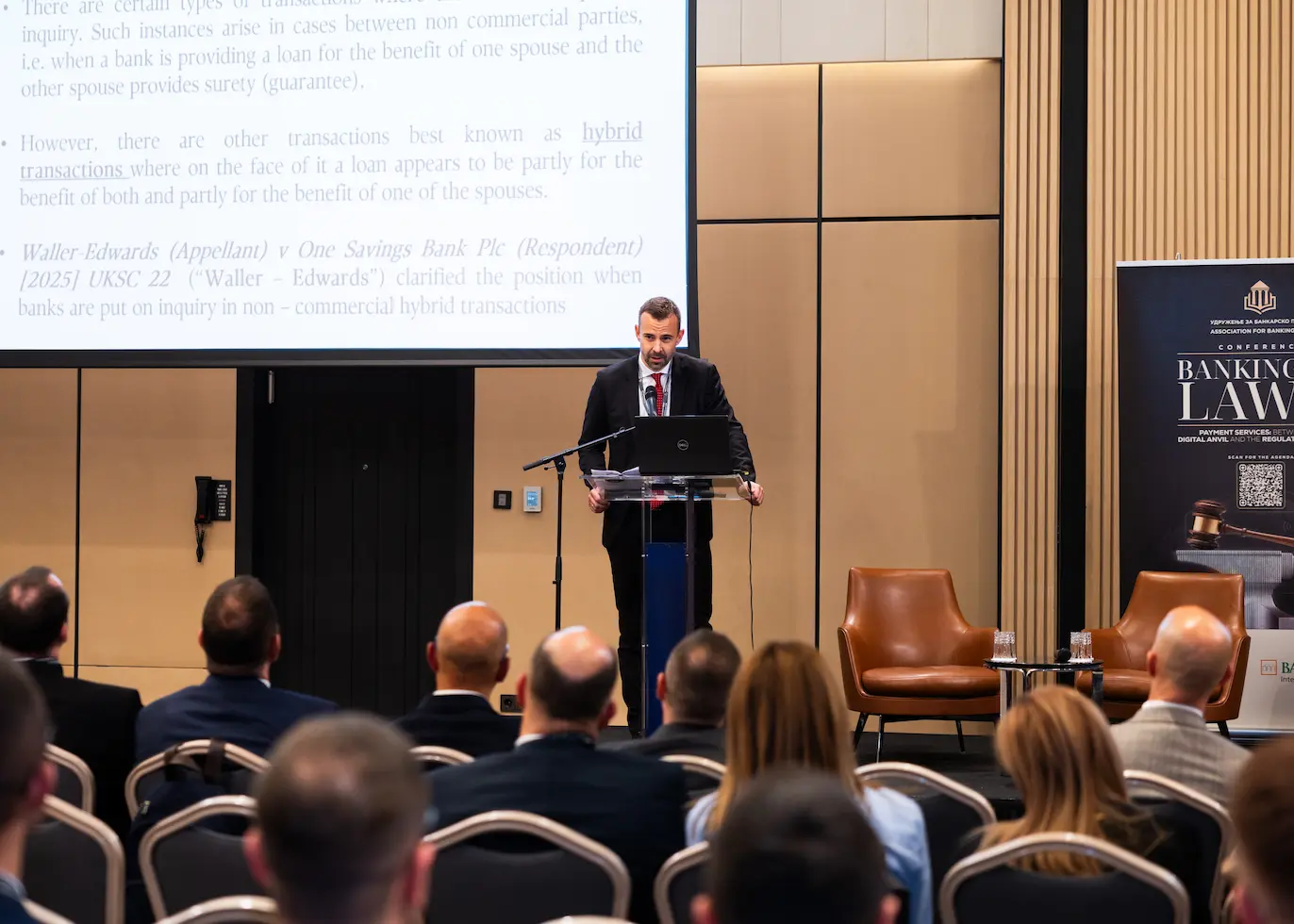
This was followed by Boris Lazić, Barrister (England & Wales), Advocate (Cyprus), who presented a case study concerning Waller-Edwards v One Savings Bank and the Etridge protocol.
The professional programme concluded with a panel discussion entitled “Corporate Governance in Banks – Is There Anything Fundamentally New?”
The panel was moderated by Professor Miloš Živković, Full Professor at the Faculty of Law, University of Belgrade.
The panel included Ana Dominiković from Banca Intesa, Kristina Buha from the Republic of Serbia, Aki Corsoni-Husain from Harneys, and Varoujan Avedikian from Andersen Global.
Contemporary Challenges in Corporate Governance
Speaking about contemporary challenges in corporate governance in banks, Ana Dominiković, Director of the Compliance Control Department at Banca Intesa, highlighted a number of issues.
These included balancing the interests of different stakeholders and ensuring diversity and effectiveness within boards.
The discussion also addressed decision-making in a complex and changing regulatory environment. Particular attention was given to the management of emerging risks.
These risks include cybersecurity and artificial intelligence.
Following the panel discussion, the conference concluded with closing remarks and its formal closing.
Belgrade as a Venue for International Dialogue on Banking Law
The two-day conference programme brought together issues at the heart of current developments in the financial sector.
At the same time, it presented the experience of institutions and experts approaching these developments from different professional perspectives.
The programme brought together representatives of central banks and regulatory institutions from Serbia, Japan, Spain, Brazil and Croatia.
In addition, representatives of the International Monetary Fund, global payment services companies, the banking sector, international law firms and academia took part.
In her opening address, the Governor of the National Bank of Serbia also highlighted the diversity of participants. She noted that the conference brought together representatives of different stakeholders relevant to the issues under discussion.
Comparative and International Perspectives
This structure made it possible to examine current issues in banking law not only through the national legal and regulatory framework.
Instead, the topics were also considered in a broader comparative and international context.
The professional presentations and panel discussions created an opportunity for the direct exchange of knowledge and experience. Furthermore, they enabled participants to compare different regulatory approaches.
The discussions also addressed the directions in which banking, payment services and their regulatory frameworks are developing.
Exchange of Knowledge and Professional Networking
At the same time, the conference provided an opportunity for representatives of the domestic banking and legal sectors to establish direct connections with foreign experts and institutions.
The establishment of professional contacts is one of the important benefits of conferences of this kind. The Governor highlighted this aspect in her opening address.
Such contacts can facilitate a lasting exchange of knowledge and experience.
By organizing the second international conference “Banking Law 2025 – Payment Services: Between the Digital Anvil and the Regulatory Hammer”, the Association for Banking Law continued to develop the international dimension of its activities.
At the same time, the conference created a platform in Belgrade for domestic and international experts to meet and exchange current knowledge and experience in the field of banking law.
The diversity of topics, the international profile of the speakers and institutions represented, and the direct exchange of views created a strong foundation for future editions of the conference.
They also provided a basis for further development of the Association’s international professional cooperation.
The Association for Banking Law extends its gratitude to the National Bank of Serbia for its support in organizing the conference and to Banca Intesa ad Beograd for its sponsorship.
The Association also extends its appreciation to all speakers, panellists, moderators and participants. Through their knowledge, experience and active participation, they contributed to the successful organization of the second international conference “Banking Law 2025”.
The Governor’s official address is available on the website of the National Bank of Serbia, while information on the participation of representatives of Banca Intesa and Intesa Sanpaolo is available on the official Banca Intesa website.